-
Get a £5 M&S voucher with your currency when you collect in a bureau. Find out how.

What is the currency in Chile?
The currency in Chile is the Chilean peso (CLP). Understanding Chile’s currency is a great place to start if you’re planning a trip here – whether shopping in the city of Santiago is top of your wishlist, or you’re heading straight for one of the country’s vineyards or sprawling national parks. And once you’ve fine-tuned your itinerary, you can buy Chilean pesos from M&S Travel Money – so you’ve ticked one more thing off your pre-travel checklist.
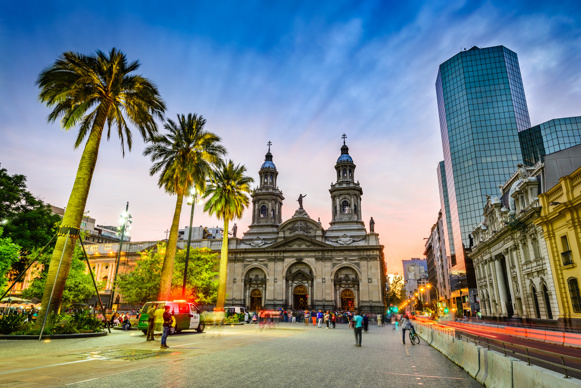
The Chilean peso: everything you need to know
The first Chilean peso was first introduced in 1817, following Chile’s independence from Spain. It replaced the Spanish real as the country’s official currency. In 1960, it was replaced with the escudo, which was the country’s currency until 1975 – when the current Chilean peso was introduced.
Today, the Chilean peso is the official and legal tender of Chile. Its currency code is CLP and its symbol is $. Chilean pesos come in both coins and banknotes.
Chilean peso denominations
Coins include:
$10, $50, $100, $500
Banknotes include:
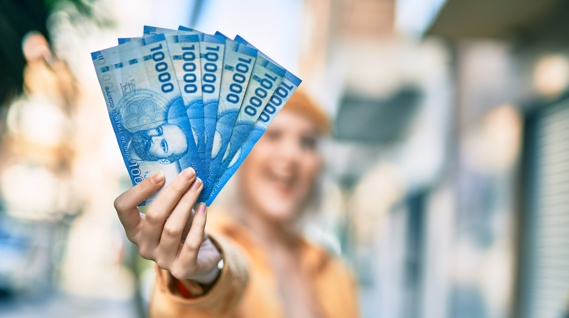
$1000, $2000, $5000, $10,000, $20,000
Is the Chilean peso used anywhere else in the world?
No, the Chilean peso is only used in Chile.
What is the current exchange rate for the Chilean peso?
Exchange rates fluctuate all the time, so use our currency calculator to check today’s pounds to Chilean pesos rate.
What currencies can you use in Chile?
Along with Chilean pesos, you might find US dollars are occasionally accepted in major tourist areas in Chile. Bear in mind that this isn’t guaranteed and isn’t the norm, so it’s not a good idea to rely on paying in USD while you’re here. If you’re offered the option to pay in Chilean pesos or USD when paying by card, for example, it can be preferable to pay in the local currency when you’re abroad due to unfavourable exchange rates for other currencies.
What payment methods are accepted in Chile?
Cash
While Chile has become increasingly card-friendly, cash remains an important part of everyday life, particularly for smaller purchases and when travelling outside of major cities. Cash is often used at places like local markets, small cafés and street food stalls, as well as at some rural attractions. It can also be useful for transport in certain areas where card payments may not always be available. Tipping is also customary in Chile, which is another reason why having some Chilean pesos in cash can be handy.
Debit and credit cards
Debit and credit cards are widely accepted across Chile, particularly in cities and tourist areas, and debit cards were the most-used payment method in 2025. Visa and Mastercard are among the most commonly accepted networks, but it's still a good idea to carry some Chilean pesos as a backup when visiting smaller towns, markets or more remote destinations where card machines may not always be available. Before travelling, check whether your bank charges foreign transaction or overseas cash withdrawal fees, as these can add to the cost of your trip.
Digital wallets
Digital payments are becoming increasingly common in Chile, with the use of cards, electronic transfers and contactless technology continuing to grow and many businesses accepting tap-to-pay cards and mobile payments. Apple Pay and other contactless services can be used at participating retailers, while contactless Mastercard payments are also available across some transport networks, including Santiago's public transport system. Bear in mind that digital payments may not be available everywhere, especially in smaller businesses or rural areas – so it’s always best to travel with a combination of payment methods.
How much money should I take with me to Chile?
Your travel budget in Chile will depend largely on what you’re planning to see and do, so it’s worth researching costs before you travel. Entrance fees for popular attractions can vary, and you may need to book in advance for some places during peak travel periods.
For example, entry to Torres del Paine National Park starts from around CLP 31,200 (about £25) for international adult visitors during the main season, while admission to La Chascona – the former home of poet Pablo Neruda – costs around CLP 9,500 (about £8). If you’re not sure exactly how much cash to take, bear in mind you can sell your leftover notes back at an M&S Travel Money bureau when you get home.*
At the time of writing, the cost of living in Chile is around 47% lower than it is in the United Kingdom, so you're likely to find many everyday purchases cost a lot less than they do back home. To give you a better idea of how much money to budget, we've listed some example costs in Chile vs the UK below* – just bear in mind these prices are illustrative.
-
A mid-range three-course meal for two: £65.00 in the UK vs £33.00 (CLP 40,000) in Chile
-
A small domestic draught beer: £5.00 in the UK vs £2.89 (CLP 3,500) in Chile
-
A regular cappuccino: £3.53 in the UK vs £2.31 (CLP 2,806) in Chile
-
A one-way ticket on local transport: £2.50 in the UK vs 66p (CLP 800) in Chile
*Example prices from Numbeo.com correct as at August 2026. All prices are illustrative.
Buying Chilean pesos with Marks & Spencer Travel Money
Heading to Chile? Don’t forget to take some local currency in cash. You can buy Chilean pesos to collect for free from 580+ participating M&S stores*.
*T&Cs apply. Subject to availability. Sell-back only available at bureau locations.
Share with your friends


