-
Get a £5 M&S voucher with your currency when you collect in a bureau. Find out how.

What is the currency in Bali?
The currency in Bali is the Indonesian rupiah (IDR), as Bali is an Indonesian island. If you’re planning a visit, this Bali currency guide is a great place to start – it includes currency basics like common denominations and average costs in Bali, as well as accepted payment methods on the island. Once you’ve done your research, you can buy Indonesian rupiah from M&S Travel Money – so you’ve got everything you need to start your holiday as soon as you arrive.

The Indonesian rupiah: everything you need to know
The currency code for the Indonesian rupiah is IDR. The currency was first introduced in October 1946 and the name comes from the Indian currency, rupee, which is Sanskrit for silver.
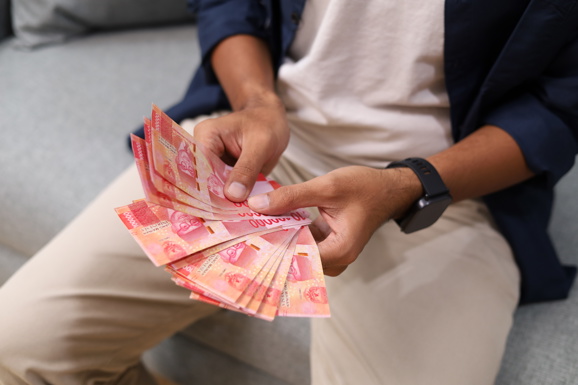
You’ll see prices in Bali displayed with the abbreviation Rp beside the value, and cash is a popular payment method across the island. Bear in mind that coins aren’t used often due to their low value, so most people pay using banknotes – and it can be useful to carry small denominations.
Indonesian rupiah denominations:
Coins include:
100Rp, 200Rp, 500Rp
Banknotes include:
1000Rp, 2000Rp, 5000Rp, 10,000Rp, 20,000Rp, 50,000Rp, 100,000Rp
Is the Indonesian rupiah used anywhere else in the world?
No – the Indonesian rupiah is only used in Indonesia, which includes the island of Bali.
What is the current exchange rate for the Indonesian rupiah?
Exchange rates fluctuate all the time, so you can use our currency calculator to check today’s pounds to Indonesian rupiah rate.
What currencies can you use in Bali?
The Indonesian rupiah is the only official currency used in Bali and across Indonesia, so this is the only currency you’ll need to take with you. If you’re paying by card, you might be offered the option to pay in your home currency instead of IDR. It’s often preferable to pay in the local currency when you’re abroad due to unfavourable exchange rates for other currencies.
What payment methods are accepted in Bali?
Cash
While digital payment methods are becoming more widely accepted across Indonesia, cash is still a popular payment method in Bali. That’s particularly true at markets and local restaurants, and in rural areas where card payments may not be accepted. Most temples also charge a small entrance fee that’s payable in cash, and the same applies to visiting waterfalls. If you’re planning to take a taxi from Bali airport to your destination, you may also need cash depending on which service you use – so always check before you travel and carry some cash as a back-up.
Debit and credit cards
Debit and credit cards are widely accepted in Bali, particularly in tourist areas like Seminyak and Ubud. Visa and Mastercard are the most widely accepted card types, although American Express may be less widely accepted – so check with your payment provider before your trip and carry alternative payment methods.
Digital wallets
While Indonesia is one of the world’s fastest-growing markets for digital payments, popular digital wallets like Apple Pay and Google pay aren’t universally accepted in Bali – so it’s sensible to travel with alternative payment methods. Local options like GoPay and OVO are widely available, and Bank Indonesia launched The Indonesia Tourist Travel Pack in 2025, which includes an Indonesian SIM card, mobile data, local phone number and e-wallet to allow visitors to make cashless payments. You can buy the pack at official service points at Bali airport, and staff can help you to get set up.
How much money should I take with me to Bali?
The amount of money you’ll need in Bali will depend on what you’ve got planned, so it’s worth researching costs before you travel. According to Numbeo, the cost of Living in Bali is 60.4% lower than in London, so you may find your money goes significantly further here.
Exiap estimate you’ll need an average daily spending amount of IDR 193,765*, or £8.94, to cover sightseeing and general entertainment in Bali. But costs can vary from IDR 10,000 (about 50p) to visit a waterfall like Kanto Lampo or Sekumpul, to IDR 500,000 (about £23) to visit a waterpark like Waterbom Bali.
To give you a better idea of how much money to budget, we've listed some example costs in Bali vs the UK below* – just bear in mind these prices are illustrative. When you’re home from Bali, you can sell your leftover notes back at an M&S Travel Money bureau if you’ve got some spare.**
-
A mid-range three-course meal for two: £80 in London vs £22.31 (IDR 530,233) in Bali
-
A small domestic draught beer: £7 in London vs £1.84 (IDR 43,816.73) in Bali
-
A regular cappuccino: £4.27 in London vs £1.69 (IDR 40,195.73) in Bali
-
A one-way ticket on local transport: £3 in London vs 19p (IDR 4,624.71) in Bali
*Example prices from Numbeo.com and Exiap.com correct as at October 2026. All prices are illustrative.
Buying Indonesian rupiah with Marks & Spencer Travel Money
Heading to Bali? Don’t forget to take some local currency in cash. You can buy Indonesian rupiah to collect for free from 580+ participating M&S stores including Simply Food**.
**T&Cs apply. Subject to availability. Sell-back only available at bureau locations.
Share with your friends


