-
Get a £5 M&S voucher with your currency when you collect in a bureau. Find out how.

Best time to visit Singapore
The best time to visit Singapore depends on your travel plans, but February to April is often considered a good time to visit as this is after the wettest months of the Northeast Monsoon, and before the hottest months of June and July. Having said that, June to September – which is considered summer – is another popular travel period in Singapore thanks to reduced rainfall, although it’s worth bearing in mind that Singapore experiences showers all year round.
We’ve covered weather and travel trends plus things to do on the island in this guide, so you can work out the best time of the year to visit Singapore depending on your plans. Before you travel, don’t forget to buy Singapore dollars (SGD) so you can start exploring as soon as you arrive.
Singapore in January
Due to its location near the equator, Singapore doesn’t experience four distinct seasons. Instead, temperatures only tend to vary by a few degrees all year round. January is one of Singapore’s coolest months, but average daytime high temperatures are still a very warm 28°C. This month is part of the Northeast Monsoon season, which means rainfall is frequent, and there can be periods of heavy or prolonged rain.
Singapore in February
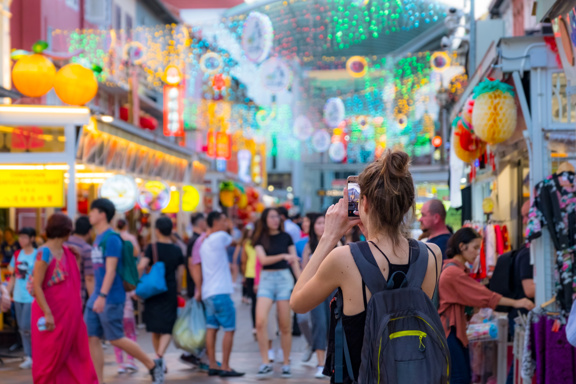
The monsoon rains begin to ease in February – although you should still pack for regular showers – and average daytime temperatures rise a little to 29°C. Singapore’s festival season kicks off around now, starting with Chinese New Year – which either falls in January or early February according to the lunar calendar. It’s celebrated with colourful parades and performances as well as lots of pop-up food stalls, so it’s a good idea to bring some Singapore dollars in cash.
Singapore in March
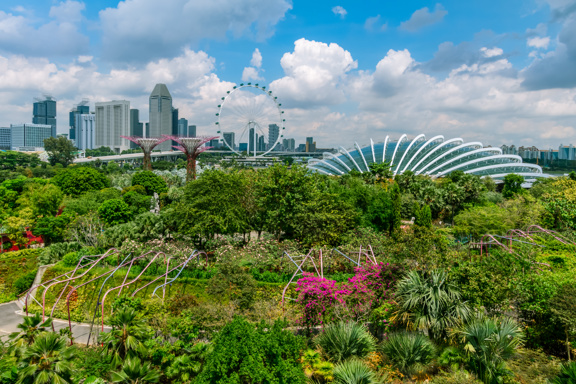
March is another peak travel month in Singapore, with very similar weather conditions to February and lots going on. Head to Gardens by the Bay – a vast urban park in downtown Singapore – to catch seasonal flower displays in bloom, including cherry blossom trees this month. And bear in mind that the end of Ramadan is often celebrated by Muslims in Singapore in March depending on the lunar calendar, so prices and crowds can peak around these dates.
Singapore in April
The weather in April is similar to previous months, although rising humidity levels can mean average daytime high temperatures of 31°C can feel much hotter. This month tends to be relatively quiet in Singapore, so it can be a good time to visit if you want to avoid the crowds at popular attractions. Wait times at Universal Studios Singapore, for example, tend to be lower this month compared to peak months like June – the main school summer holidays in Singapore.
Singapore in May
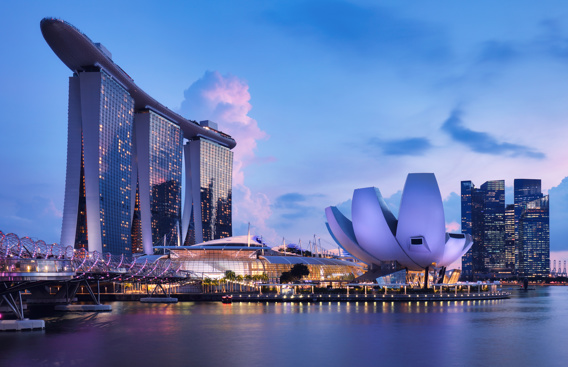
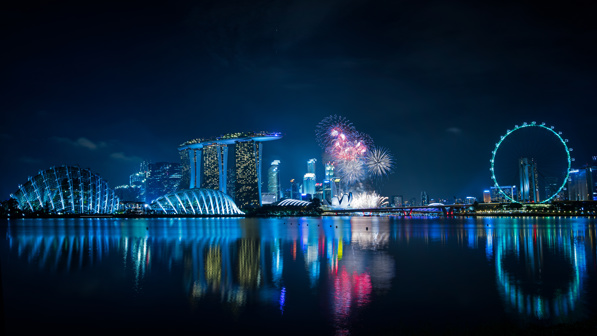
Like April, May is considered shoulder season in Singapore and this can be a good time to visit before the schools break up next month. You may also find lower prices on things like flights and accommodation. Just bear in mind that while this isn’t monsoon season, May does experience high humidity, showers and thunderstorms – so just be prepared to flex your plans around the weather. Marina Bay Sands is a great option if you need a break from the rain or heat, as this massive leisure resort is both indoors and air conditioned.
Singapore in June
June tends to coincide with Singapore’s main school holiday season, so crowds and prices often rise this month. It’s also one of the hottest months, so pack with high temperatures and humidity in mind. Air-conditioned attractions like the Flower Dome and Cloud Forest at Gardens by the Bay are ideal for very hot, humid days. The huge greenhouses are climate-controlled, so you can enjoy the tropical plant displays in comfortable temperatures.
Singapore in July
July’s weather is very similar to June’s and conditions tend to be hot and humid. Like the rest of the year, Singapore can experience rain in July, although it tends to be short, sharp showers rather than all-day downpours. Take a leisurely cruise along the Singapore River to see the city’s landmarks from the water, explore colourful neighbourhoods like Haji Lane early in the morning when it’s cooler, or take a night safari at Singapore Zoo to see the nocturnal animals in their element.
Singapore in August
Temperatures stay hot and humid in August, but it’s still very possible to explore Singapore’s outdoor attractions – particularly in the mornings and evenings. National Day on the 9th August is an important date in the calendar this month, with parades and fireworks to celebrate Singapore’s independence from Malaysia in 1965. It’s a public holiday, so bear in mind that some attractions may be closed.
Singapore in September
The intense summer heat tends to ease off a little in September, as the Southwest Monsoon transitions into the Northeast Monsoon, although daytime high temperatures are still around 30°C on average and rain becomes more common. The Mid-Autumn Festival is a highlight this month, with Chinese lantern displays and traditional mooncakes for sale at locations all over the city. As well as lots of local neighbourhood celebrations, there are big public events at Gardens by the Bay and Jurong Lake Gardens, and the festivities usually run for a couple of weeks.
Singapore in October
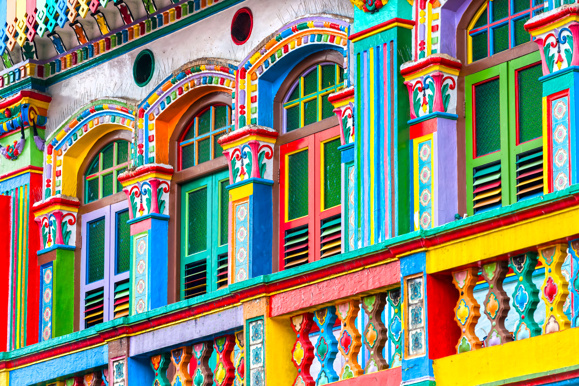
October is a similar story to September in terms of weather in Singapore, with inter-monsoon rains, warm temperatures and moderate humidity. Little India, one of Singapore’s most colourful neighbourhoods, celebrates Diwali this month with illuminated decorations and street market stalls – so don’t forget to bring cash for souvenirs. The Formula 1 Singapore Grand Prix often happens this month, too, and the Mid-Autumn Festival can spill over into October – so check the dates for both before you travel.
Singapore in November
November falls within Singapore’s second inter-monsoon period, making this one of the rainiest months. Unlike the short showers during the dry season, these can be heavy downpours – so as well as packing an umbrella, waterproof shoes are a good idea. You can still make the most of outdoor activities during dry spells, and Singapore’s many indoor shopping malls are particularly popular this month when it’s wet. Plus, from mid-month the city’s festive celebrations begin with the Orchard Road Christmas lights switch-on.
Singapore in December
Singapore’s monsoon rains are a big feature in December and it’s typically the wettest month of the year. Downpours are often in the afternoons and evenings, and humidity levels can be high – particularly right before a storm – so travel plans should include a degree of flexibility. The good news is, Singapore goes big on Christmas festivities and Gardens By The Bay hosts a Christmas Wonderland with illuminated displays and stalls. Marina Bay hosts the city’s New Year’s Eve celebrations with a huge fireworks display over the water.
Budgeting for things to do in Singapore
To help you budget for your trip to Singapore, it’s worth checking entry fees for popular attractions before you visit. A one-day ticket for Universal Studios Singapore, for example, can start from around SGD 76.00, or about £45, but the exact cost can change depending on the time of year and day of the week. Gardens by the Bay, meanwhile, is free to visit – but you’ll need to pay for attractions like the Cloud Forest, and prices differ for residents and non-residents.
Buying Singapore dollars with Marks & Spencer Travel Money
Ready to go? Buy Singapore dollars (SGD) online for free collection from 580+ participating M&S stores, including Simply Food*. And when you’re home, you can sell leftover notes back at an M&S Travel Money bureau*.
*T&Cs apply. Subject to availability. Sell-back only available at bureau locations.
Prices quoted in this article are correct at the time of writing in October 2026.
Share with your friends


