-
Get a £5 M&S voucher with your currency when you collect in a bureau. Find out how.

What is the currency in Denmark?
Denmark’s currency is the Danish krone (DKK). It’s the official currency of the Kingdom of Denmark – which also includes Greenland and the Faroe Islands – so if you’re planning a trip to any of these destinations you’ll see prices displayed in Danish kroner while you’re there.
Before you exchange your GBP to DKK, take a look at our guide to the currency in Denmark – we’ve covered everything from currency denominations to average costs to help you plan your trip. And when you’re ready, you can buy Danish krone to take with you, so you can start exploring as soon as you get there.
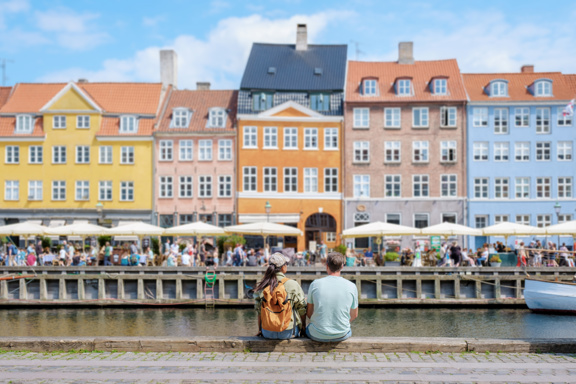
What you need to know about the Danish krone
The Danish krone is the official currency in Denmark, Greenland and the Faroe Islands. It’s represented by the currency code DKK and the symbol kr. ‘Krone’ means ‘crown’ in Danish, and the currency was first introduced in 1875.
Although the Danish krone is pegged to the euro – which means its value has been fixed against it – Denmark has opted out of the eurozone since 1992 and is not on the list of countries that use the euro.
The Danish krone is subdivided into 100 øre, and Danish kroner come as both coins and banknotes.
Danish krone denominations
Coins include:
50 Øre, 1kr, 2kr, 5kr, 10kr, 20kr
Banknotes include:
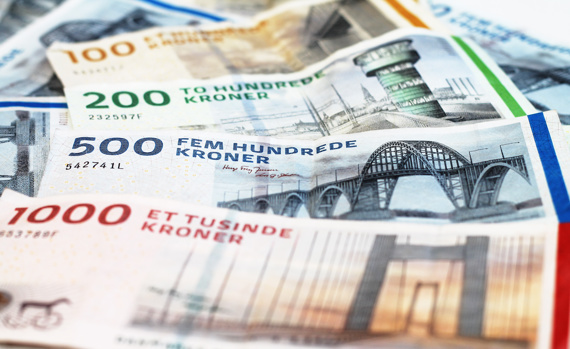
50kr, 100kr, 200kr, 500kr
Is the Danish krone used anywhere else in the world?
Danish kroner are only used in Denmark, Greenland and the Faroe Islands, so you can’t spend them anywhere else. If you’ve got leftover kroner after a visit to one of these destinations, you can sell currency back at an M&S Travel Money bureau*.
What is the current exchange rate for the Danish krone?
As exchange rates fluctuate, today’s GBP to DKK rate is likely to be different to tomorrow’s. You can use our currency calculator to get today’s GBP to DKK exchange rate.
What currencies can you use in Denmark?
The Danish krone is the only currency you can officially use in Denmark, as this is the only legal tender here. Despite Denmark not being part of the eurozone, you might find that some places accept euros – particularly in the capital of Copenhagen – but bear in mind that euros are not legal tender in Denmark. And when you’re paying by card, don’t be surprised if you’re offered the option to pay in GBP or euros alongside Danish krone – although it’s usually better to pay in the local currency when you’re abroad to avoid additional fees.
What payment methods are accepted in Denmark?
You can use a range of payment types in Denmark – from cash to card and digital payment methods. We’ve taken a closer look at your options below.
Cash
While the use of cash payments is declining in Denmark, it’s still wise to travel with some Danish krone in cash. Coins and notes can be handy to pay for small purchases, for example, as well as tipping and paying taxi and public transport fares in rural areas. Some market vendors may also only accept cash, so it’s a good idea not to rely too heavily on electronic payment methods if you’re planning to visit places like Torvehallerne market, Copenhagen’s famous food hub.
Debit and credit cards
Denmark is considered one of the most digitised countries when it comes to payments, and card payments are very widely accepted here. Most places that take electronic payments accept Visa and Mastercard, but American Express may be slightly less widely accepted – so always carry a range of options when you travel. It’s also worth checking what foreign currency fees may be added by your issuing bank before you travel, so you don’t face any surprises while you’re away. And if you’re not sure whether to make card payments in the local currency or pounds while you’re in Denmark, we’ve explained why it’s often recommended to pay in the local currency when you’re abroad.
Digital wallets
Digital wallet payments are becoming increasingly popular in Denmark. Popular options like Google Pay and Apple Pay are available in most shops that are set up for digital wallet payments – especially in big cities like Aarhus, Odense and Aalborg. In more rural areas, though, you may find that digital wallet payments aren’t accepted, and the same applies for some self-service ticket machines in Denmark. For that reason it’s always worth having a combination of payment methods to hand when you travel.
How much money should I take with me to Denmark?
The amount of money you’ll need to budget will depend on your Denmark holiday plans – a week’s worth of sightseeing in the capital of Copenhagen is likely to cost you more than a few days in lesser-known Odense, for example.
Entry fees to popular attractions are also quite varied – Copenhagen Zoo, for example, offers entry tickets priced at 249 per adult at the time of writing, which is equivalent to around £29. A one-day ticket to Legoland Billund is around 349 DKK (just over £40) and entrance to Tivoli Gardens is around 145 DKK (just under £17), so the amount of spending money you’ll need will depend on which sights you want to tick off.
It’s also worth bearing in mind that the cost of living in Denmark is around 15% higher than in the United Kingdom at the time of writing, so you may find average prices are comparatively higher than they are back home. To give you a better idea, we’ve listed some example costs in Denmark vs the UK* – just bear in mind these prices are illustrative.
A mid-range three-course meal for two: £65.00 in the UK vs £80.88 (700.00 kr) in Denmark
A small domestic draught beer: £5.00 in the UK vs £6.35 (55.00 kr) in Denmark
A regular cappuccino: £3.54 in the UK vs £4.96 (42.95 kr) in Denmark
A one-way ticket on local transport: £2.50 in the UK vs £2.77 (24.00 kr) in Denmark
*Example prices from Numbeo.com correct as at May 2026. All prices are illustrative.
Buying Danish kroner with Marks & Spencer Travel Money
All packed for Denmark? You can buy Danish kroner online to collect for free from 580+ participating M&S stores*.
*T&Cs apply. Subject to availability. Sell-back only available at bureau locations.
Share with your friends


