-
You can now use Apple Pay and Google Pay online and in store.

When is the best time to visit South Korea?
The best time to visit South Korea is considered to be either spring, which runs from March to May, or autumn – which runs from September to November. These two seasons are when weather conditions are usually great for exploring, whether you’re heading to the capital of Seoul, the beaches of Busan or the volcanic landscapes of Jeju Island.
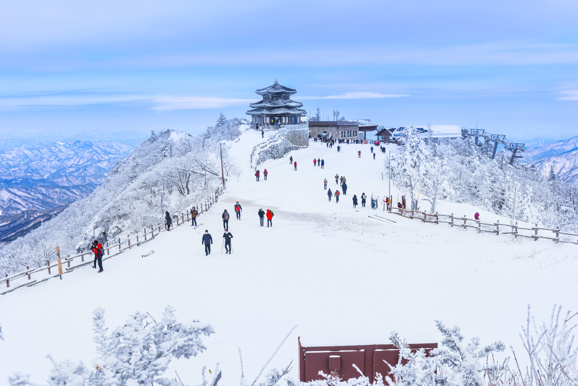
Of course, if your South Korea holidays revolve around skiing, you’ll want to visit during winter – and December and January offer the highest chances of snow in the country’s mountainous regions. As for monsoon season, South Korea’s monsoon runs from late June to late July, with frequent and heavy downpours in some areas that can affect your travel plans.
To help you plan your trip, we’ve taken a closer look at the best time to visit South Korea based on the weather, travel trends, and seasonal things to do in South Korea. When you’re ready to go, don’t forget to buy South Korean won to spend on your travels.
South Korea in January
January is one of the coldest months to visit South Korea, with average temperatures around -2°C and low rainfall. Snow is common in mountainous regions like Gangwon Province, so this is peak season for skiing – and resort areas like Pyeongchang can get booked up quickly. The Hwacheon Sancheoneo Ice Festival also happens this month when the Hwacheoncheon Stream freezes over, and you can try everything from ice fishing to sledding. The event draws over a million visitors every year, so book well in advance.
South Korea in February
With average temperatures around 1°C, February in South Korea is cold – with occasional snow possible. If you’re planning to explore Seoul you can expect crisp and clear winter days and minimal rain. Seollal – Lunar New Year – is usually celebrated this month, with cultural performances at places like Seoul’s Gyeongbokgung Palace. The city’s traditional markets are stocked with New Year gifts and trinkets, so bring cash if you’re planning to shop – as many of the smaller stalls don’t accept card payments.
South Korea in March
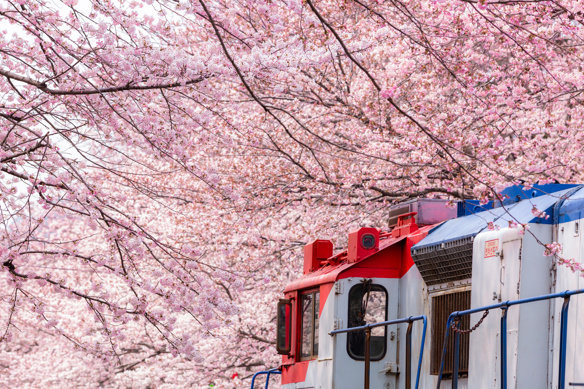
March is the start of spring in South Korea, with average temperatures around 7°C and relatively low rainfall. Tourist numbers are fairly low, particularly at the start of the month, so this is a comparatively quiet time to explore cities like Busan and Seoul. Early cherry blossoms can start to appear in southern regions like Jeju Island, and the Jinhae Gunhangje Festival – Korea’s biggest cherry blossom event – starts at the end of the month. Visitors head to picturesque spots like Gyeonghwa Train Station and Yeojwcheon stream to appreciate the trees in full bloom.
South Korea in April
April is one of the most popular months to visit South Korea, with average temperatures around 12°C and minimal rainfall. Cherry blossom season is in full swing, which means places like Yeouido Park in Seoul – home to around 1,800 cherry trees – buzz with visitors, street performers and food stalls. With this being one of South Korea’s peak travel seasons, travel and accommodation prices can rise, so it’s worth planning a trip well in advance to find the best prices and availability.
South Korea in May
Visitor numbers in May are still high thanks to warm, comfortable weather in South Korea, with average temperatures around 18°C. It’s an ideal time for sightseeing in cities like Gyeongju, which packs in so many ancient sights it’s known as ‘the museum without walls’. Likewise, Seoul is a popular destination with travellers in May, as the weather lends itself to exploring. If you’re planning a trip, don’t miss a chance to try the ‘yeopjeon dosirak’, or ‘brass coin lunchbox’ at Tongin Market. Just buy 10 brass coins at the market entrance – the cost for these is 5,000 South Korean won at the time of writing – and you’ll be given an empty lunchbox to fill with different foods from around the market in exchange for your brass coins.
South Korea in June
June is the start of early summer in South Korea, with average temperatures around 22°C and increasing rainfall towards the end of the month. Tourist numbers drop a little, making June a good shoulder-season option if you want to travel outside of peak. Coastal destinations like Gangneung are popular with travellers looking to escape the summer heat of Seoul, and Gyeongpo Beach is the big draw here. Famous for its scenic sunrises, this sandy stretch of coastline is backed by pine trees and dotted with food stalls.
South Korea in July
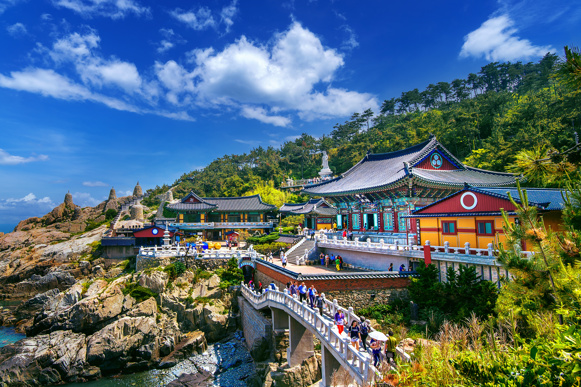
Late June into July is monsoon season in South Korea, with average temperatures around 25°C, high humidity and frequent downpours. The rain can affect travel plans, particularly in Seoul, and indoor attractions like Gwangjang Market can get quite busy. Visitor numbers dip slightly, although domestic tourism goes up during South Korea’s school summer holiday period this month. A couple of hours’ drive south of Seoul, the Boryeong Mud Festival brings millions of visitors to Daecheon Beach every July. Bring some cash for the lockers, showers and food vendors, and get ready to wallow in the mineral-rich mud.
South Korea in August
August is hot and humid in South Korea, with average temperatures around 27°C and continued rainfall as the monsoon season tails off. Coastal destinations like Busan are especially busy, with beaches like Haeundae attracting summer crowds keen to escape the heat of the city. In Seoul, indoor attractions like Lotte World – the world’s biggest indoor theme park – are a popular way to escape the rain and the heat, although it’s still very possible to explore outdoors as long as you plan around the weather.
South Korea in September
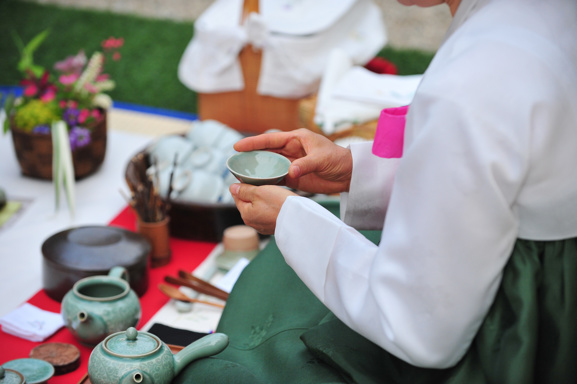
Both the heat and rain ease off in September, which sees average temperatures around 23°C and far fewer showers. That makes September a great time to explore big attractions like Changdeokgung Palace, home to a UNESCO-listed Secret Garden, and Bukchon Hanok Village – which has hundreds of traditional homes, called hanok. While you’re here, visit the Traditional Korean Tea Institute and take part in a traditional tea ceremony to learn the local etiquette, called ‘darye’. It’s an intrinsic part of Korean culture, and you’ll find traditional tea houses all over the country.
South Korea in October
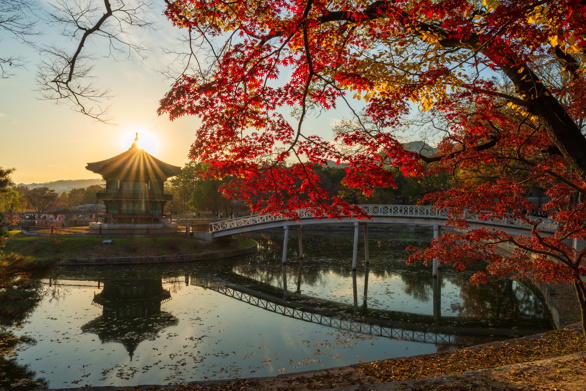
October is one of the best months to visit South Korea if you want to fit lots of sightseeing in, with average temperatures around 15°C and low rainfall. The autumn foliage in places like Seoraksan National Park really comes to life towards the end of the month, and likewise at locations around Seoul – Namsan Park and Seoul Forest are particularly pretty. Tourist numbers are high in scenic areas like these, as well as in Jinju for the annual Jinju Namgang Yudeung Festival. This runs for around 16 nights, and the water and banks of the Namgang River are lit up with thousands of colourful lanterns. The event is free, but it’s useful to have some cash for the food and souvenir stalls.
South Korea in November
November’s average temperatures cool to around 8°C, and visitor numbers drop slightly this month – so you may find big attractions are quieter and travel and accommodation prices may be lower. The colourful autumn foliage of October is still a feature – particularly early in the month and especially around the capital. If you’re visiting this month, you can’t miss the Seoul Lantern Festival – it lights up a stretch of Cheonggyecheon Stream near the City Hall, and draws millions of visitors every year.
South Korea in December
December marks the start of winter in South Korea, with average temperatures around 2°C and low rainfall, although snow is possible this month. Visitor numbers start to rise in December, particularly towards the end of the month in line with the Christmas holidays – meaning travel costs often rise, too. Big cities like Seoul are decorated with festive lights and traditional lanterns, and the ski resorts in Gangwon Province start to gear up for peak season – although you might find some good deals this month before things are in full swing.
Don’t forget about taking spending money for activities in South Korea
According to Exiap, the average daily cost for visiting attractions and entertainment in South Korea is 38,781 South Korean won – just under £20* at the time of writing. The exact amount of spending money you’ll need will depend on your travel plans though, so it’s always worth checking prices ahead of your trip.
For example, the entry fee for Gyeongbokgung Palace – one of South Korea’s top attractions – costs around 3,000 KRW, or £1.50*. In comparison, the entry cost for N Seoul Tower in Namsan Park may cost around 29,000 won – around £14.50* – just for the observatory, so prices can really vary.
When you’re travelling in South Korea you’ll also notice that card payments are widely accepted, even at smaller shops and cafes and for small purchases. It’s still a good idea to carry some cash in the local currency, as street food stalls in particular may not always be set up to accept card payments. Also bear in mind that South Korea has a no-tipping culture, so there’s no need to leave a cash tip at cafes, tea houses or restaurants unless there’s a tips jar – and it can be considered rude if you do.
Buying South Korean won with Marks & Spencer Travel Money
Ready to go? Buy South Korean won online for free collection from 580+ participating M&S stores*.
*T&Cs apply. Subject to availability.
Prices quoted in this article correct at the time of writing in March 2026.
Share with your friends


