-
You can now use Apple Pay and Google Pay online and in store.

When is the best time to visit India?
The best time to visit India depends on which region you’re heading to. As the seventh-biggest country in the world, India is huge – and the climate can be vastly different from one area to the next.
In December, for example, the Himalayas are covered in snow and the temperatures can drop well below freezing. During the same month in Goa, meanwhile, conditions are perfect for a sunny beach break.
India’s monsoon season is a big consideration for travellers – it runs from June to September and can have a big impact on travel plans. October to April, on the other hand, is considered the best time to visit India across much of the country – with visitor numbers often at their peak in December and January.
We’ve broken down the best time to visit India by month, bearing in mind things like weather, rainfall, events and average travel prices. When you’re ready to go, you can buy Indian rupees ahead of your trip – just make sure you’re familiar with India’s currency import restrictions, as the rules vary according to the country you’re a resident of.
India in January
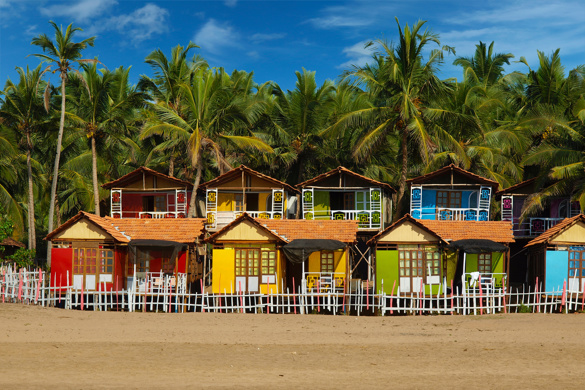
January is one of India’s driest months, and while it’s relatively cold in the north – where you can ski this month – warmer temperatures in the south make January one of the most popular times to visit coastal locations like Kerala. The average temperature here is a balmy 28°C, with very minimal rain, which is ideal for exploring the region’s beaches, hill stations and backwaters.
India in February
Like January, February is considered one of the best months to visit India, as weather conditions are generally good across most of the country – all the way from the north to the south. Goa is a popular destination this month, especially during Goa Carnival – which runs for five days before lent. Expect lots of street parades and parties, and book your accommodation well in advance as this is a popular time to visit.
India in March
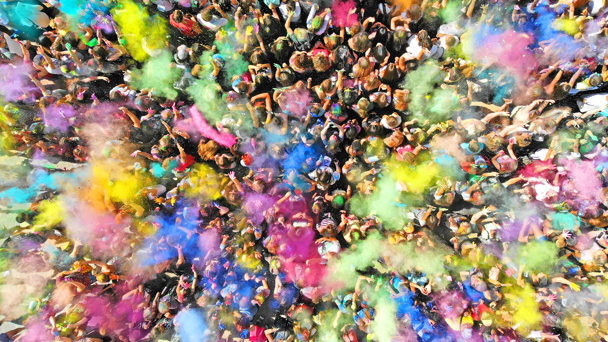
March is the beginning of the hot season in India, meaning temperatures start to rise but are still comfortable enough for beach breaks or exploring the Golden Triangle without the extreme heat of the coming months. Temperatures in Agra, home to the Taj Mahal, reach around 32°C this month. And across the country, one of the biggest attractions in March is Holi, the Hindu festival where locals throw coloured powders and throw street parties to mark the arrival of spring. Bring cash to buy things like stuffed parathas and sweet kulfis from the pop-up food stalls, as food is a big part of the festivities.
India in April
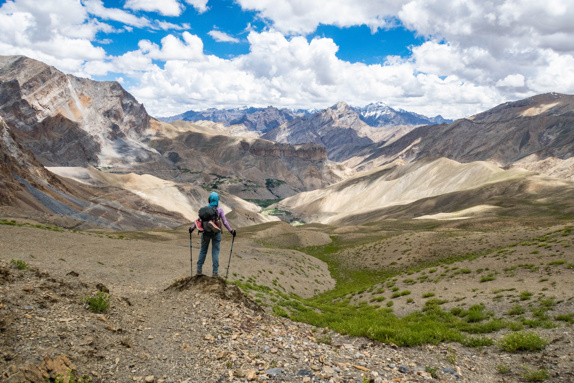
Temperatures start to ramp up across India from mid-April, with cities like Delhi and Jaipur often reaching 40°C. That makes April a good month to visit if you’re planning to trek in the mountains, which are cool even during the summer months. April is also a popular time for wildlife-spotting in India’s national parks, as the heat draws many animals to cool off at watering holes – giving you a much better chance of seeing them.
India in May
Temperatures across much of India can reach 45°C in May, so sightseeing plans are limited to early mornings and late evenings in lots of areas. Many locals and visitors retreat to hill stations – high-altitude towns designed to provide an escape from the peak summer heat – and wildlife-viewing trips set off in the early hours of the morning before the heat of the day sets in. Vesak, Buddha’s birthday, is celebrated this month with a public holiday. The date changes according to the full moon, so check before you travel as many businesses close.
India in June
India’s monsoon season starts officially in June, although in some areas it can begin towards the end of May. Many travellers avoid this season due to the high humidity and potential for flooding in most areas, which means prices for flights and accommodation at this time tend to be lower. Southern Indian spots like Kerala and Goa get the heaviest rainfall, with over 400 mm of rain. Himalayan treks, on the other hand, are popular – as the far north manages to escape the rainy weather and the roads are no longer blocked by snow.
India in July
India is in the thick of monsoon season in July, and this is the wettest month – with very heavy and intense downpours that can make travel to some areas difficult. National parks like Ranthambore and Bandhavgarh close completely during monsoon season, both for the safety of visitors and to give habitats a chance to regenerate. Thankfully, there are pockets of India that are ideal to visit this month – including Ladakh in Kashmir. Home to Pangong Lakeon, an incredible alpine lake, this area manages to avoid the worst of the monsoon weather in July.
India in August
While August is still monsoon season in India, the rain is often lighter this month and it can be an amazing time to experience the country in full bloom. Plenty of festivals and special events fill the calendar during monsoon season, too, from India’s Independence Day on August 15th to Kerala’s Onam Festival this month. If you’re visiting for the latter, don’t miss a trip to the Padmanabhaswamy Temple – it’s considered the world’s richest, with treasures worth billions. Just make sure you bring some Indian rupees, as it’s customary to leave a cash offering.
India in September
India’s monsoon season comes to a close in September, meaning the rain eases off and particularly the last few weeks can be a good time to visit if you want to explore without the peak-season crowds but don’t mind adapting your plans around rain. You should still pack with the expectation of showers in most areas, but bear in mind that temperatures are still 25°C to 32°C on average, so it can still be very hot. Humidity is also high – around 70-80% – meaning many travelers head to breezy coastal areas in favour of busy cities.
India in October
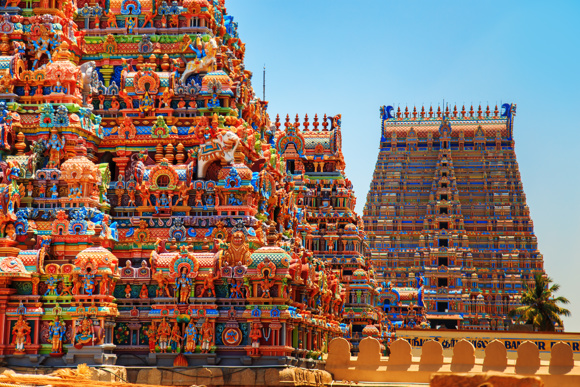
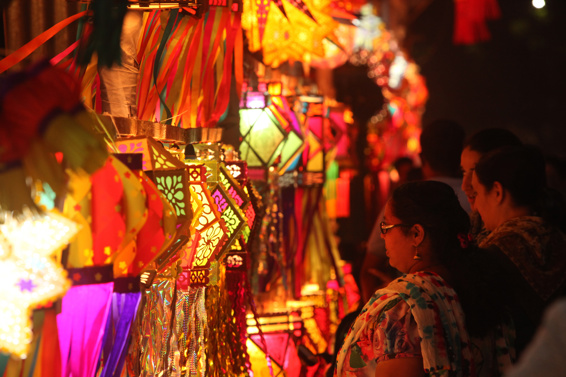
October marks the start of the season considered the best time to visit India. From now until March, much of the country experiences milder temperatures, clear skies and minimal rain. Northern cities like Delhi are pleasantly cool enough to enjoy exploring, and southern locations enjoy warm, sunny days after the monsoon season. October 2nd – Gandhi’s birthday – is a national holiday, and Diwali, the Hindu festival of lights, also happens in October or November.
India in November
India’s most southerly destinations, like Kerala and Tamil Nadu, are best visited from November onwards – with the monsoon season officially over, temperatures are ideal for the beach and humidity is lower than previous months. Conditions are excellent for travel across the country though, so visitor numbers tend to rise across the board from November onwards – meaning prices for things like flights and accommodation rise, too. Bear in mind that Diwali is sometimes celebrated in November, so it’s worth checking before your trip in case of any closures that might affect your travel plans.
India in December
December is one of the most popular months to visit India – weather conditions are ideal for travel across the country, and many international visitors book a sunny holiday to India to coincide with the winter holidays back home. Goa is especially popular in December, and the many famous street markets here take on a festive twist. Anjuna Flea Market, for example, is even bigger than usual in December with extra traders selling festive trinkets and foods. Bring cash – many vendors don’t take card – and you can shop for one-off Christmas gifts and decorations right by the beach.
When is monsoon season in India?
India’s main monsoon season, or rainy season, runs from June to September – although it can start from mid-May in some regions.
What is the hottest month in India?
May is usually the hottest month in India, and temperatures are an average 36°C.
Don’t forget about taking spending money for activities in India
According to Exiap, the average daily cost for visiting attractions and entertainment in India is ₹920 Indian Rupees (about £7). The exact figure will depend on what you plan to do in India though – as some major sights will set you back more than this, whereas hidden gems are likely to cost less.
The Taj Mahal, for example, is one of the most famous buildings in the world, and India’s top sight – with up to eight million visitors a year. Tickets for international visitors cost ₹1100 Indian rupees (around £10), with an additional fee to enter the mausoleum. It’s a good idea to book online ahead of time and arrive early if you want to avoid the biggest queues.
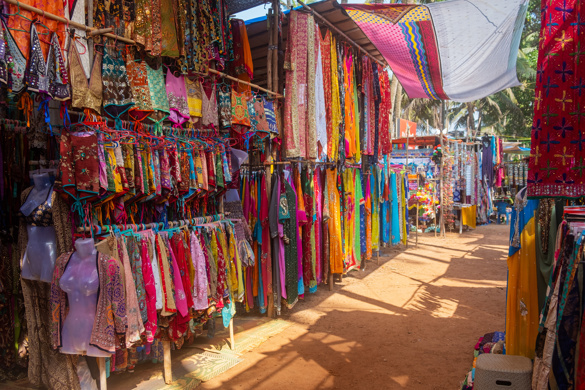
Away from the big-name sights of Agra, India packs in a long list of street markets worth visiting – and you’ll find items like spices and fabrics are comparatively cheap compared to back in the UK. At Sarojini Nagar Market in Delhi, you’ll find branded clothes at budget prices – just bear in mind that many vendors don’t accept card payments, so it’s wise to carry some cash.
Buying Indian rupees with Marks & Spencer Travel Money
Ready to go to India? Buy Indian rupees online for free collection from 580+ participating M&S stores*.
*T&Cs apply. Subject to availability. Please refer to currency import restrictions.
Share with your friends


